Characteristics of dreams
Characteristics of dreams
|
Communicating the atmosphere of a dream is difficult
Carl Spitteler (1845-1924), Swiss poet |
|
An illustration of the closed world of dreams
"Once upon a time, I, Chuang Tzu, dreamt I was a butterfly, fluttering hither
and thither, to all intents and purposes a
butterfly |
Most dreams are banal and uninteresting
Extensive studies made by the American researchers Hall, Van de Castle, and Snyder support this conclusion. Hall analyzed the reports of 1'000 people about their dreams at home; Snyder studied the reports of 650 people who were awakened from REM sleep in a laboratory. Evaluations of this considerable amount of dream material showed that only a small percentage of the dreams contained the bizarre and fantastic elements that we usually associate with them. It is such untypical dreams that stick in our memory, while we forget the ordinary ones. |
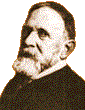 "Dreams cannot
be told; they dissolve when the rational mind tries to grasp them in words."
"Dreams cannot
be told; they dissolve when the rational mind tries to grasp them in words."
 . I
was conscious only of following my fancies as a butterfly, and was unconscious
of my individuality as a man. Suddenly I awaked, and there I lay, myself
again. Now I do not know whether I was a man dreaming I was a butterfly,
or whether I am now a butterfly dreaming I am a man."
. I
was conscious only of following my fancies as a butterfly, and was unconscious
of my individuality as a man. Suddenly I awaked, and there I lay, myself
again. Now I do not know whether I was a man dreaming I was a butterfly,
or whether I am now a butterfly dreaming I am a man."